The American Prosperity Plan
Four key elements that promise to exceed 1950s economic growth and reduce interest payments on the national debt by more than 50%.
America's Economic Reality
U.S. Nominal GDP
$31.82 trillion
U.S. Real (Inflation Adjusted) GDP
$9.5 trillion
No net change since 2008!
See economist John Williams, Shadow Government Statistics.
U.S. Private Debt Today
$43.13 trillion
136% of GDP!
Private debt on eve of 1929 crash: 90% of GDP
Private debt in 1930: 130% of GDP
After deleveraging, private debt in 1950: 50% of GDP
U.S. National Debt
$38.91 trillion
Four Key Elements
Debt Jubilee
Reducing Private Debt
Private debt is a far greater problem than even Public Debt. (Private debt has triggered virtually all financial crises, including the 1929 crash and Global Financial Crisis of 2008-9.) It holds back individuals, families and businesses, and has led to a stagnant economy since 2008. The average American's private debt is $72,200. (Total household debt - about $19 trillion - divided by total population 21 years of age or older equals $72,200.) There is only one responsible way to deleverage now — a Debt Jubilee that makes both debtors and creditors whole, and treats the debt-free equally, all without inflation.
Emitting Greenbacks
Reducing Domestic Holdings of Public Debt and Eliminating Intragovernment Debt
Domestic holdings of U.S. national debt amounts to $21.91 trillion. Intragovernment debt, including Social Security, amounts to $7.65 trillion. It's time for the Treasury Department to emit "Greenbacks," of the type that the GOP-led Civil War Congress and Lincoln Administration emitted to help win the war. This will reduce domestic holdings of national debt to $13.96 trillion in 5 years and will eliminate Intragovernment debt in 20 years.
Financial Transaction Tax
Reducing Foreign Holdings of Public Debt
Foreigners hold $9.35 trillion of US national debt. It's time to levy a financial transaction tax on the trade of US stocks, as was done from 1914 to 1966. Consequently, foreign holdings of US debt can be reduced by 80% in 30 years.
American Infrastructure Bank
Yet Another Incredible Boost to the Entire Economy
The American Society of Civil Engineers has identified about $3.7 trillion of needed infrastructure funding. The National Low Income Housing Coalition estimates an affordable housing shortfall of about $1.67 trillion. The proposed AIB, which the Treasury Department would manage, could lend most of the needed funding at submarket rates without raising taxes and with borrowing. Better yet, the Treasury would make a profit. 25 million high paying jobs would result and real GDP would grow about 3%.
What History Tells Us

Aristotle
America's Founding Fathers devoured the works of Aristotle, who lived from 384 to 322 B.C. Aristotle argued that money is what the sovereign say it is. Surely, he would have applauded the Lincoln Administration's emission of Greenbacks and would say to the federal government today - "Absolutely, emit Greenbacks again!" (See the Home page for more about Aristotle.)
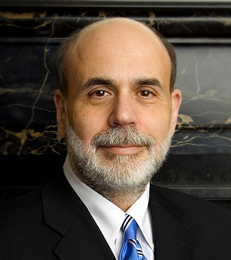
Ben Bernanke
Federal Reserve Board Member, Remarks of November 2, 2002
"Regarding the Great Depression … we [the Federal Reserve] did it [caused the Great Depression]. We're very sorry. … we won't do it again."
Bernanke meant that the Fed let down Main Street and a great many banks, too, in the 1930s. In response to the Global Financial Crisis of 2008-09, Bernanke, then Fed Chairman, bailed out the superrich and big banks. But he and his fellow Fed Board members forgot about Main Street! 18 years later, Main Street is still hurting. Private debt is too big. It's time to "deleverage" private debt, revive private-sector aggregate demand and rekindle the economy. It's time for Dr. Joe's American Prosperity Plan!
Rally Behind This Campaign
The American Prosperity Plan is putting a Debt Jubilee front and center. Let us combine bold economic reform, wide-ranging study groups, and the incredible diversity of American insight into a new launch of the American Dream.